
Picking out wood for your first project can feel confusing. There are so many options at the store, and it’s hard to know where to start.
The right wood for your project comes down to four main choices: hardwood, softwood, plywood, or treated lumber, and each one works best for different jobs. Hardwoods like oak and maple are strong and look nice, so they work well for furniture. Softwoods like pine are cheaper and easier to cut, which makes them good for beginners. Plywood gives you flat, wide panels for shelves or cabinets. Treated lumber stands up to weather, so it’s the top pick for outdoor builds like decks or fences.
This guide breaks down the differences between these wood types in simple terms. You’ll see the pros and cons of each option, along with some easy rules to help you decide what to buy. Hopefully, you’ll feel ready to walk into a lumber store and pick the right wood for your next project, or at least not totally lost.
Start With the Material That Fits the Job
Every wood project starts with one question: where will this piece live, and what will it need to survive? Once you answer that, choosing the right wood gets much easier.
Match Wood to Indoor, Outdoor, and Structural Use
Wood selection depends on where your project will sit and what it needs to handle.
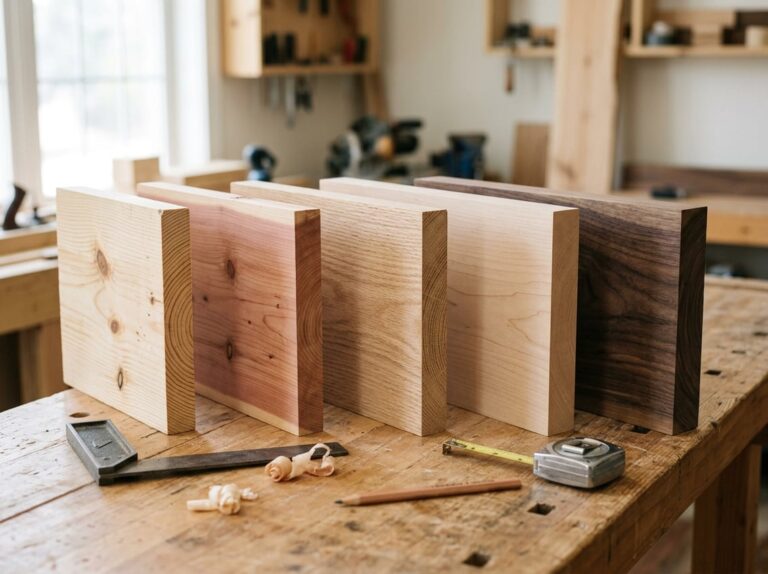
Indoor furniture doesn’t face rain or bugs, so you can focus on looks and feel. Hardwoods like oak, maple, and cherry work well here because they hold up to daily use and take stain nicely.
Outdoor projects are a different story. Wood outside gets rained on, baked by the sun, and attacked by insects. You need pressure-treated lumber, cedar, or redwood for these builds, since they resist rot and bugs naturally or through chemical treatment.
Structural work, like deck framing or shed walls, needs strength more than looks. Treated lumber or engineered wood products handle load-bearing jobs safely.
| Use Case | Best Wood Types | Why |
|---|---|---|
| Indoor furniture | Oak, maple, cherry, walnut | Durable, finishes well |
| Outdoor furniture | Cedar, redwood, treated pine | Resists moisture and rot |
| Structural framing | Treated lumber, engineered wood | Handles weight and stress |
Use a Simple First-Project Decision Rule
If you’re just starting out, keep it simple. Ask yourself three questions before buying any lumber.
First, will this project sit indoors or outdoors? That answer alone rules out half your options. Second, does it need to support weight, or is it mostly decorative? Third, how much are you willing to spend while you’re still learning?
For most first projects, pine or poplar is your safest bet. Both are affordable, easy to cut, and forgiving if you make mistakes. Save hardwoods like walnut or cherry for later, once you’ve built confidence with basic joinery and tools.
Balance Durability, Appearance, Budget, and Tools
Choosing the right wood for your project means weighing four things together, not picking just one.
Durability matters most for furniture that gets daily use, like tables or chairs. Appearance matters more for statement pieces where grain and color take center stage. Budget shapes what’s realistic; hardwoods often cost two to three times more than softwoods per board foot.
Finally, think about your tools. Hardwoods are tougher on blades and take more effort to cut and sand. If you’re working with basic hand tools or a beginner-level saw, softwoods will save you time and frustration while you build your skills.
Hardwoods: Durable Woods for Furniture and Fine Work
Hardwoods come from deciduous trees and tend to be denser and stronger than softwoods. This makes them your best choice when you need furniture, cabinets, or flooring that will last for decades.
What Makes a Hardwood a Hardwood
Hardwoods grow on deciduous trees, the kind that lose their leaves every year. Oak, maple, walnut, and cherry all fall into this group.
The term “hardwood” refers to the tree type, not always how hard the wood actually feels. Some hardwoods, like poplar and soft maple, are actually softer than certain softwoods.
What sets hardwoods apart is their tight grain structure. This makes them more resistant to dents, scratches, and wear over time.
You’ll find hardwoods split into two groups:
- Domestic hardwoods, like oak, maple, walnut, cherry, birch, ash, and hickory
- Exotic hardwoods, like teak and mahogany, usually imported and pricier
Popular Hardwood Species and Their Best Uses
Each hardwood species has its own strengths. Knowing them helps you pick the right wood for your project.
| Species | Best Uses |
|---|---|
| Red oak | Cabinetry, furniture, flooring |
| White oak | Outdoor furniture, flooring, cabinets |
| Hard maple | Butcher blocks, cutting boards, workbench tops |
| Soft maple | Painted furniture, drawer boxes |
| Black walnut | Fine furniture, dining tables |
| Cherry | Cabinetry, fine furniture |
| Birch | Cabinets, drawer boxes |
| Ash | Furniture, tool handles |
| Hickory | Flooring, cabinets |
| Teak | Outdoor furniture, boat building |
| Mahogany | Fine furniture, musical instruments |
Hard maple stands out for kitchen surfaces because it resists knife marks well. Walnut and cherry are go-to choices when you want a piece that looks impressive without paint or stain.
Hardwood Advantages and Limitations
Hardwoods offer plenty of benefits, but they come with trade-offs you should weigh before buying.
Advantages:
- Strong and long-lasting
- Handles daily wear well
- Takes stain and finish beautifully
- Ideal for furniture that gets heavy use
Limitations:
- Costs more than softwood or plywood
- Harder to cut and shape by hand
- Heavier, which can make large projects harder to move
- Some species, like exotic hardwoods, may be harder to source
Softwoods: Affordable Choices for Beginners and Building
Softwoods come from trees that grow fast and cost less than most hardwoods. This makes them a smart pick for your first projects, framing jobs, and anything you build outdoors.
What Makes a Softwood a Softwood
Softwoods come from coniferous trees, like pine, cedar, fir, and spruce. These trees have needles and cones instead of broad leaves.
The name “softwood” refers to the tree type, not how hard the wood actually is. Some softwoods, like Douglas fir, are harder than many hardwoods.
Softwood trees grow faster than hardwood trees. That’s why softwood lumber costs less and stays easy to find at any lumberyard. You’ll also notice softwoods usually have a straighter, simpler grain pattern than hardwoods. This makes them easier to cut and shape when you’re just starting out.
Common Softwood Species for Everyday Projects
Different softwood species work better for different jobs. Here are some you’ll run into often:
- White pine: soft, light, and easy to cut. Great for interior trim and shelving.
- Yellow pine (southern yellow pine): dense and strong. Common in construction lumber and dimensional lumber for framing.
- Western red cedar: resists rot and insects naturally. A top choice for fencing, siding, and outdoor furniture.
- Redwood: similar to cedar in decay resistance. Often used for decking and outdoor structures.
- Cypress: handles moisture well. Good for siding and outdoor builds.
- Douglas fir: strong and stiff. Ideal for workbenches and structural framing.
- Spruce: lightweight with good strength. Useful for general construction and rustic furniture.
Basswood and balsa are technically hardwoods, but they’re soft and light like softwoods. You’ll often find them near softwoods in beginner project guides for carving or light craft work.
Softwood Advantages and Limitations
Softwoods offer a lot for the price, but you should know their limits too.
Advantages:
- Lower cost than most hardwoods
- Easy to cut, nail, and sand
- Widely available at lumberyards and home centers
- Good strength-to-weight ratio for framing and building
Limitations:
- Softer surface means it dents and scratches more easily
- Some species warp if not dried properly
- Less refined grain pattern than hardwoods, which can matter for fine furniture
For beginners, softwoods give you room to make mistakes without wasting money. They work well for rustic furniture, fences, decking, and basic construction lumber projects where a polished look isn’t the main goal.
Plywood, MDF, and Other Sheet Goods
Sheet goods give you flat, stable panels that solid wood can’t match, which makes them the go-to choice for cabinets, shelving, and workbenches. Plywood and MDF each have strengths, and knowing when to use each one will save you time, money, and frustration.
When Plywood Is Better Than Solid Wood
Plywood resists wood movement better than solid lumber. Since it’s made from thin layers glued together with the grain running in different directions, it doesn’t expand and contract as much when humidity changes.
Plywood is a smart pick for cabinet boxes, shelving, and workbenches, where you want panels to stay flat and square over time.
Plywood comes in wide sheets, so you can build large parts without gluing narrow boards together. That saves time and cuts down on joinery work.
Solid wood still makes sense for legs, face frames, and anywhere you want a natural look with visible edges. But for the guts of a project, plywood is usually stronger and more practical.
| Feature | Plywood | Solid Wood |
|---|---|---|
| Stability | High | Moderate |
| Sheet Size | Large (4×8 ft) | Limited by tree size |
| Cost | Moderate | Higher for wide boards |
| Look | Layered edges | Natural grain |
Selecting Plywood Grades and Veneer Faces
Plywood grades tell you what to expect from the surface. Grades run from A to D, with A being the smoothest and most defect-free.
For cabinet doors or shelving you want to stain, look for birch plywood with an A-grade face veneer. It sands smooth and takes finish well.
If the panel will be painted or hidden inside a cabinet, a lower grade like B or C saves money without hurting the final result. Check both faces of the sheet, since many are graded differently on each side.
Look at the core too. Veneer-core plywood is lighter and holds screws well, while MDF-core plywood is heavier but gives you a flatter surface for finishing.
Where MDF Works and Where It Does Not
MDF is flat, smooth, and free of knots, which makes it great for painted cabinets, shelving, and parts that need a clean surface. It cuts cleanly and doesn’t split like solid wood.
But MDF has limits. It’s heavy, and it doesn’t hold up well around moisture, since it can swell and fall apart if it gets wet.
It also doesn’t hold screws as well as plywood, so joinery needs extra care. Pocket screws or dowels often work better than screws driven straight into the edge.
Skip MDF for workbenches or anything that needs to support heavy loads or resist impact. Save it for panels that stay dry and get painted, not stained.
Treated Lumber and Naturally Durable Outdoor Woods
Some woods survive outdoors because of chemical treatment, while others survive because of what’s naturally inside them. Knowing which type you’re working with helps you pick the right wood for decking, fencing, siding, or furniture without wasting money or effort.
When to Use Pressure-Treated Pine
Pressure-treated pine works well for structural projects where looks matter less than strength. The treatment process pushes preservative chemicals deep into the wood, protecting it from rot, insects, and moisture damage.
You’ll find it in decking frames, fence posts, and other outdoor projects that stay hidden or get painted over. It costs less than naturally durable woods like cedar or redwood, which makes it a smart pick if you’re on a budget.
Keep a few things in mind. Treated pine can warp as it dries out, and the chemicals mean you shouldn’t use it for cutting boards or anything that touches food. Always let it dry before painting or staining it.
Natural Rot Resistance in Cedar, Redwood, and White Oak
Cedar, redwood, and white oak resist rot on their own, without chemical help. Western red cedar and red cedar both contain natural oils that fight off decay and keep bugs away, which makes them popular for fences, siding, and outdoor furniture.
Redwood offers similar protection and has a straight grain that makes it easy to cut and shape. It’s a common choice on the West Coast, where it’s easier to find and often cheaper than shipping it elsewhere.
White oak stands out for its density and strength, which is why boat builders have used it for centuries. Teak also belongs in this group, prized for its high natural oil content and long lifespan in wet conditions, though it costs more than most other options.
| Wood Type | Rot Resistance | Best Uses |
|---|---|---|
| Western Red Cedar | High | Fencing, siding, furniture |
| Redwood | High | Decking, outdoor furniture |
| White Oak | Very High | Boat building, outdoor structures |
| Teak | Very High | Furniture, marine projects |
| Cypress | Moderate to High | Fencing, siding |
Finishing and Fastening Wood for Weather Exposure
No matter which wood you choose, finishing it right extends its life outdoors. Check the moisture content before you apply any finish. Wood that’s too wet won’t accept stain or sealant well, and it may trap moisture underneath.
Use a sealant or exterior-grade stain that blocks water and UV rays. Reapply it every one to three years, depending on how much sun and rain the wood gets.
For fasteners, always use stainless steel or hot-dipped galvanized screws and nails. Regular steel fasteners rust quickly outdoors, and that rust can stain the wood or weaken the joint over time.
Compare Wood Properties Before You Buy
Not all wood behaves the same way once it leaves the store. A few quick checks can help you avoid boards that warp, split, or just don’t hold up to your project’s demands.
Read Hardness With the Janka Scale
The Janka hardness scale shows how much force it takes to press a steel ball into a piece of wood. Higher numbers mean harder wood.
This matters because hardwoods and softwoods perform differently under daily wear. For example, hickory and oak rank near the top of the Janka test, making them good picks for flooring and furniture that takes a beating. Pine and cedar rank much lower, so they dent and scratch more easily.
Before you buy, check the Janka rating for your species. If you’re building something that gets heavy use, like a tabletop or stair treads, choose a wood higher on the scale.
Check Grain, Knots, and Board Stability
Wood grain shows how the fibers run through a board. Grain direction affects how the wood cuts, sands, and holds joinery, so always check it before you start cutting.
Knots are spots where branches once grew. They can look nice in rustic furniture, but they weaken the board and make sanding harder. A tight knot usually stays in place. A loose knot can fall out over time.
Grain pattern also matters for looks. Straight grain gives a clean, even appearance, while wild or curly grain adds character but can be trickier to work with. Look down the length of each board before buying. Check for straight grain, avoid loose knots, and skip boards with visible cracks near the ends.
Plan for Humidity and Seasonal Movement
Wood absorbs and releases moisture based on the humidity around it. This constant exchange is called wood movement, and it happens even after the wood is cut and dried.
As moisture content changes, boards can bow, cup, or twist. A bow curves along the length of the board. A cup curves across its width. A twist means the corners don’t sit flat.
To avoid these problems, store your wood in the same space where you’ll use it for a few days before building. This lets the moisture content adjust to your project’s environment. Also, check the wood’s moisture level with a moisture meter if you have one, especially for larger projects like flooring or cabinetry where movement is more noticeable.
Buy, Inspect, and Prepare Lumber With Confidence
Once you know which wood type fits your project, you need to know how to price it, check it for defects, and pick options that match your values. These skills make a lumberyard trip a lot less stressful.
Calculate Quantity and Cost by Board Foot
Lumberyards usually price hardwood by the board foot, not by the piece. One board foot equals a piece of wood 12 inches long, 12 inches wide, and 1 inch thick.
To find board feet, multiply thickness (inches) by width (inches) by length (inches), then divide by 144. A board that’s 1 inch thick, 6 inches wide, and 8 feet long comes out to 4 board feet.
Before you shop, make a cut list. Write down every piece you need for your project, with exact dimensions. Add 10-15% extra for mistakes, defects, and waste. This keeps you from running short or overspending on lumber you won’t use.
Dimensional lumber and construction lumber, like 2x4s, are usually priced per piece or per linear foot instead.
Inspect Boards at Lumberyards
Don’t just grab the first board you see. Pull several from the stack and check each one carefully before buying.
Sight down the length of each board at eye level. Look for three common warping problems:
- Bow: a curve along the flat face, like a rocking chair
- Cup: a curve across the width, like a shallow trough
- Twist: corners that don’t sit flat, like a propeller
Check for knots too. Tight knots are usually fine and add character to woodworking projects. Loose or dark-ringed knots can fall out and weaken the board, so avoid these for anything structural.
Look at both ends for cracks, and run your hand along the surface to feel for rough spots or dampness. Spending a little time inspecting saves you from bringing home lumber that won’t work.
Choose Sustainable and Reclaimed Options
Reclaimed wood comes from old barns, factories, or other structures being torn down. It often has unique color and texture you can’t find in new lumber, and using it keeps usable wood out of landfills.
Check reclaimed boards closely for hidden nails, screws, or metal fragments before cutting. A metal detector can help you avoid damaging your saw blade.
If you want new lumber that’s harvested responsibly, look for the Forest Stewardship Council (FSC) label. This certification means the wood came from forests managed to protect long-term forest health.
Choosing sustainable wood doesn’t mean sacrificing quality. Many suppliers now offer FSC-certified boards in the same species and grades you’d find otherwise, so you can build with confidence.
Frequently Asked Questions
Wood shopping comes with a lot of terms and choices, and it’s normal to have questions before you start your first project. Here are answers to the questions beginners ask most often.
What is the difference between hardwood and softwood?
Hardwood comes from trees that lose their leaves each year, like oak, maple, and cherry. Softwood comes from trees that stay green all year, like pine, cedar, and fir.
These names describe the type of tree, not how strong the wood actually is. Some softwoods, like Douglas fir, are actually harder than some hardwoods.
Hardwood usually costs more and takes more effort to cut and sand. Softwood is often cheaper and easier to work with, which makes it a good choice when you’re still learning.
What are the main types of lumber used for beginner woodworking projects?
You’ll mostly run into four types of wood: softwood, hardwood, plywood, and treated lumber. Each one acts a bit differently and suits different projects.
- Softwood is affordable and easy to cut, so it’s a solid pick for practice and simple builds.
- Hardwood costs more and looks better, and it holds up longer, so people often use it for furniture.
- Plywood comes from thin wood layers glued together, giving you flat, stable sheets for cabinets or shelves.
- Treated lumber has chemicals added to fight off rot and bugs, so you’ll find it in decks or outdoor stuff.
Is hardwood or softwood better for a first woodworking project?
Softwood usually makes more sense when you’re just starting. Pine, for example, is cheap, easy to cut, and forgiving if you mess up.
Hardwood takes more effort to cut and sand, and it’s pricier, so mistakes can sting a bit.
Once you get a few softwood projects under your belt, you might feel ready to try hardwood. It’s nice for small tables or shelves where you want to show off the wood grain.
When should I use plywood instead of solid wood?
Plywood works well for big flat surfaces, like cabinet sides, shelves, or drawer bottoms. It stays flatter than solid wood and doesn’t crack or warp as easily over time.
People usually pick solid wood for parts you see up close, like table tops or chair legs. It’s also better for anything you want to carve or shape.
Plywood comes in different grades, so it’s smart to check the edges before you buy. Try to avoid sheets with gaps or bubbles between the layers.
What is treated lumber, and when is it safe to use?
Treated lumber is wood soaked in chemicals to protect it from rot, mold, and insects. Most home improvement stores label it as “pressure-treated.”
It’s the go-to for anything touching the ground or getting rained on, like decks, fences, or raised garden beds. Because of the chemicals, you shouldn’t use it for indoor furniture, cutting boards, or anything that touches food.
Wear gloves when cutting treated lumber, and don’t burn the scraps. The chemicals can release some nasty fumes.
How do I choose the right wood for indoor, outdoor, and furniture projects?
If you’re building indoor furniture, hardwood’s usually your best bet. It stands up to daily use and honestly, it just looks better as it ages. But hey, if you’re watching your wallet, sanded pine can do the trick too, especially if you put some effort into the finish.
For outdoor stuff, go with wood that shrugs off the weather, like cedar or redwood. Treated lumber works too, especially if you’re making something structural like a deck frame.
When you need a flat, steady surface for cabinets or shelves, plywood makes life easier. Just pick your wood based on how much wear and tear it’s going to get, and whether it’s going to see any moisture.